01Stop Filling In, Start Marking
Most painters, early on, treat the brush like a decoration tool — something to push paint around until a shape is covered. The result looks overworked and flat. The shift comes when you stop thinking about filling and start thinking about marking: each stroke placed once, with a clear direction and pressure, then left alone.
The mark itself carries information. A long, horizontal drag across a sky reads as calm. A stabbing, upward flick reads as agitation. Claude Monet built whole surfaces from directional strokes that followed the form — water marked horizontally, foliage dabbed, reflected light dragged downward. The content and the handling were the same gesture. That's the goal.
02The Three Variables Worth Controlling
Direction. Your stroke should go somewhere intentional. Follow the plane of a surface, the growth direction of grass, the fall of fabric. Strokes that wander randomly destroy form even when the colour is correct.
Pressure. Bear down at the start of a stroke and lift at the end to get a calligraphic line that thickens and tapers. Keep pressure even for a flat, opaque slab of colour. Neither is better — both are choices. Practice one stroke repeatedly, varying pressure alone, and you'll be surprised how wide the vocabulary is.
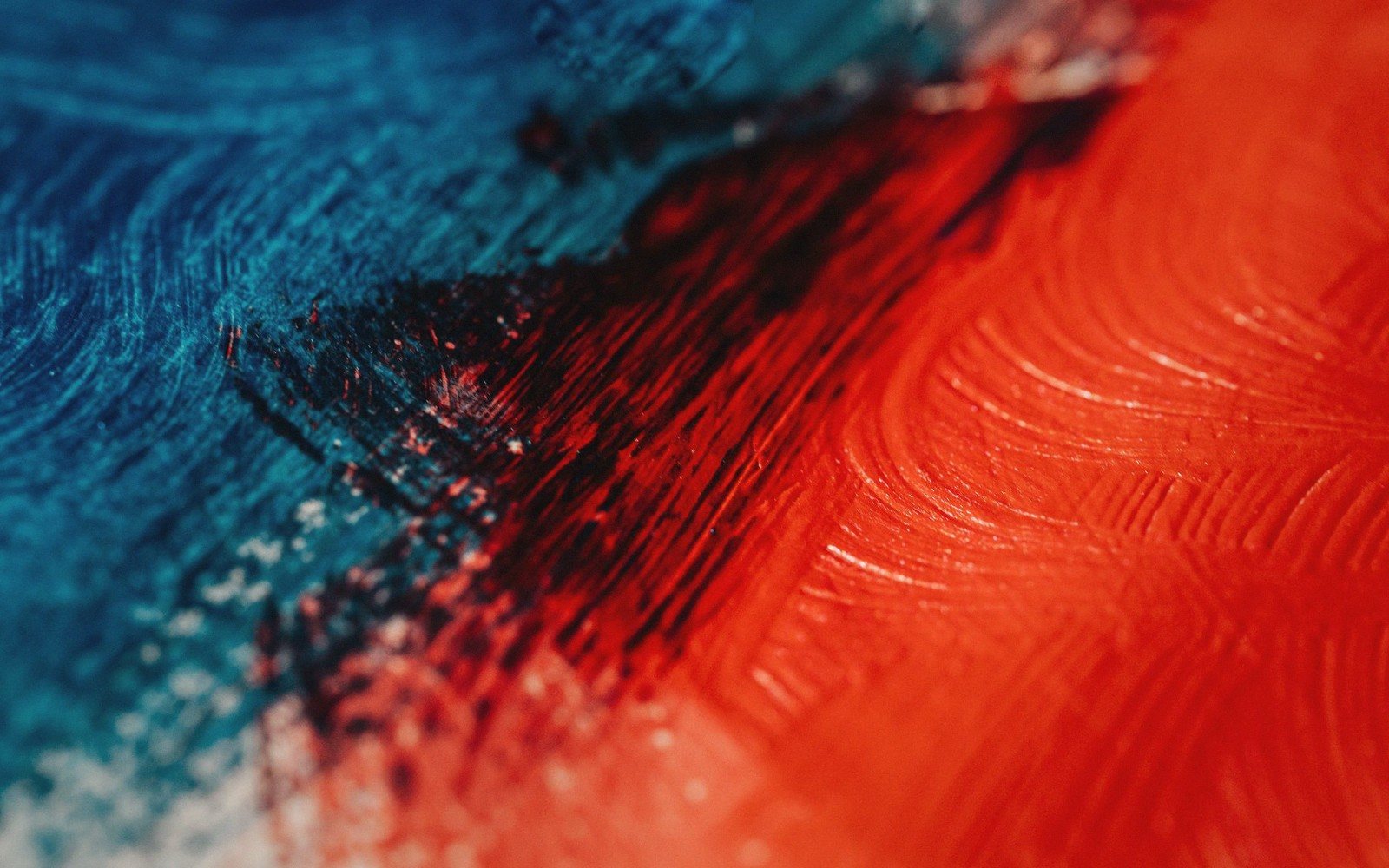
Loaded or lean. A brush loaded fat with paint will leave a raised, juicy mark with real texture. Drag that same brush nearly dry across a rough surface and you get broken colour1 — paint catching tooth but missing the valleys. Dry, lean marks over dry underlayers are the basis of scumbling, and the optical flicker it produces is irreplaceable for skies and foliage.
03Make the Mark, Then Stop
The instinct to go back and soften or blend is usually the thing that kills a fresh passage. A confident, unblended stroke sitting next to another confident, unblended stroke does its own optical blending at a distance — that's the whole mechanic behind Impressionist handling. Touch it again and you've lost both edges and the energy of the mark.
A practical drill: mix a colour, load the brush generously, make three strokes that describe an object, and put the brush down. Don't let yourself add a fourth. The constraint is absurd, but it forces you to make each stroke count, and the results are almost always livelier than the cautious, over-blended version sitting beside them.
Loose or tight, fast or slow, the brushmark is the most direct evidence of a painter's attention. Treat it accordingly.
Notes
- broken colour. paint that doesn't fully cover the layer beneath, creating optical texture ↩
- scumbling. thin, dry paint dragged over a dry layer to create broken, flickering texture