01Two Ways to Break Up Colour — and Why That's Often Exactly What You Need
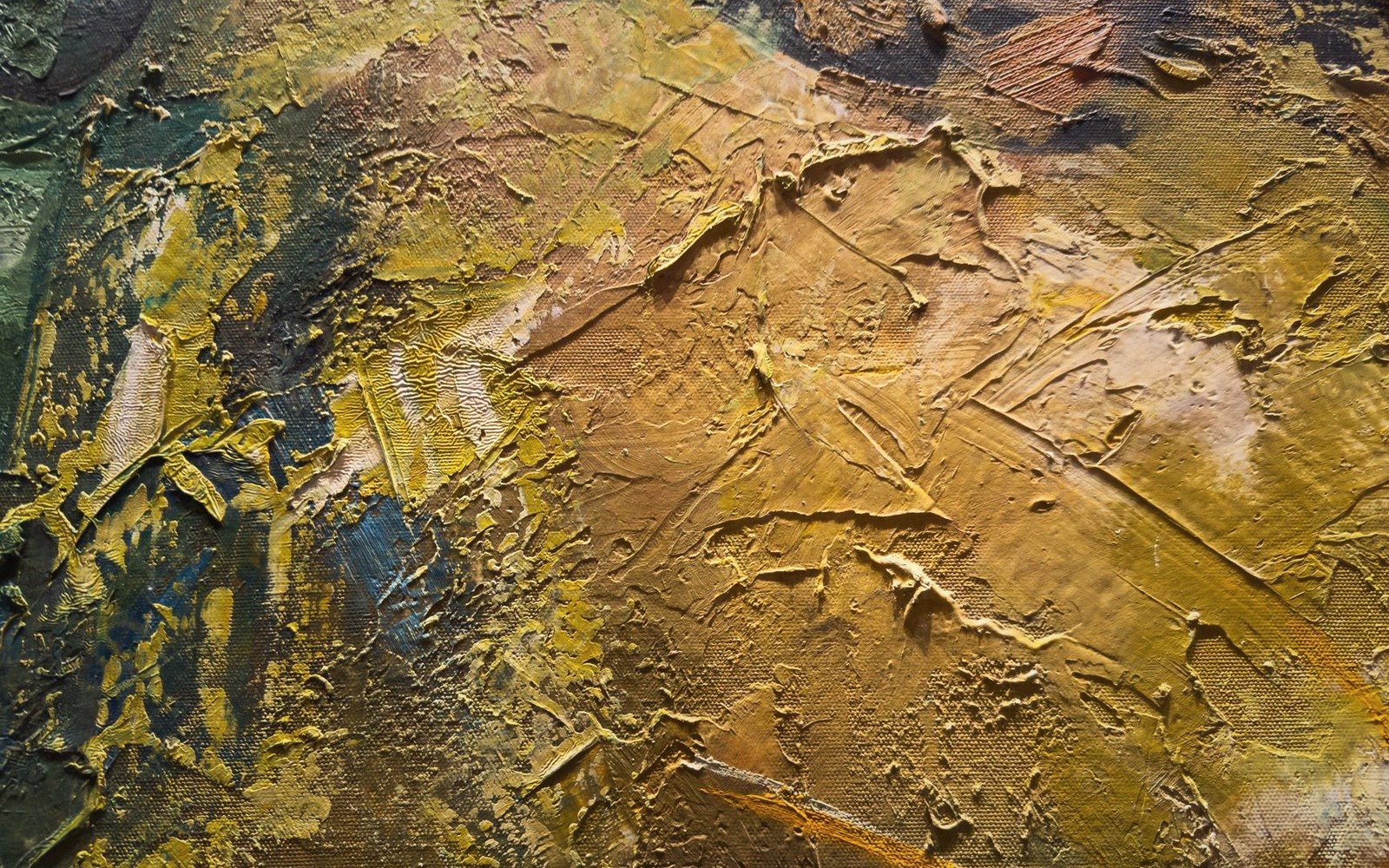
Load a brush with barely any paint, drag it fast across a dry surface, and something useful happens: the colour catches the peaks of the texture and skips the troughs. That's dry brush1. Scumbling is its close cousin — a thin, semi-opaque layer worked loosely over a dry passage, so the colour beneath shows through in broken patches. Different in execution, but both techniques do the same fundamental job: they break up a flat area of colour into something that reads as light, texture or age.
The difference worth knowing is this. Dry brush is typically applied with a dragging, near-parallel stroke — think the side of a fan brush skimmed across rough canvas, leaving a track of broken pigment. Scumbling is more circular or scrubbing, using a stiff brush to push a cloudy veil of lighter or darker paint over what's already dry. The surface below breathes through.
For skies, scumbling2 is almost indispensable. A mid-blue sky that looks painted and dead can be rescued by working a small amount of titanium white — barely thinned, slightly warm — in loose circles over the dried passage. The blue beneath flickers through, and suddenly the sky has air in it. Claude Monet and the Impressionists built entire surfaces on this principle, even when they worked wet-on-wet: broken, uneven coverage that catches light rather than swallowing it.
Foliage responds brilliantly to dry brush. A dark underpainting3 of mixed green or raw umber gives you the shadow structure; then a lighter, warmer green dragged across it catches the texture of the canvas and reads as dappled leaf-light without fussy detail. The rougher the surface — linen, coarse canvas, cold-press oil paper — the more pronounced the break.
For worn stone, old wood, weathered walls: dry brush is the honest answer. Load less paint than feels right, test the stroke on a spare scrap, then apply. If it looks good on the scrap, it'll look good on the painting.
One practical note: both techniques need a fully dry underlayer or you'll pick up what's beneath and get mud. In oils, that means patience — or a fast-drying underpainting in acrylic. The reward is worth waiting for: a surface that feels like it has history, depth and a little roughness to it, rather than smooth colour sitting flat on the picture plane.
Notes
- dry brush. applying near-dry paint so it catches surface texture and skips the troughs ↩
- scumbling. thin, semi-opaque paint loosely worked over a dry layer, letting colour beneath show through ↩
- underpainting. a dry tonal or coloured base layer worked before subsequent paint passages ↩
- alla prima. wet-on-wet painting completed in a single session